DRT 2027 will feature internationally recognised researchers working across a broad spectrum of deformation and tectonic studies. Their research interests include experimental rock deformation, energy transition challenges, metamorphic processes, numerical modelling, ore-forming systems, structural geology, active faulting, and InSAR-based monitoring of crustal deformation. Their diverse expertise reflects the interdisciplinary nature of modern deformation research and its applications to both fundamental and societal challenges.
Keynote speakers
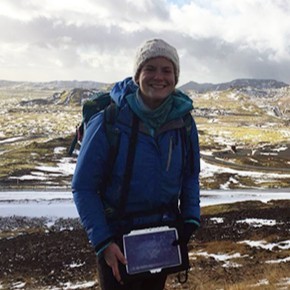
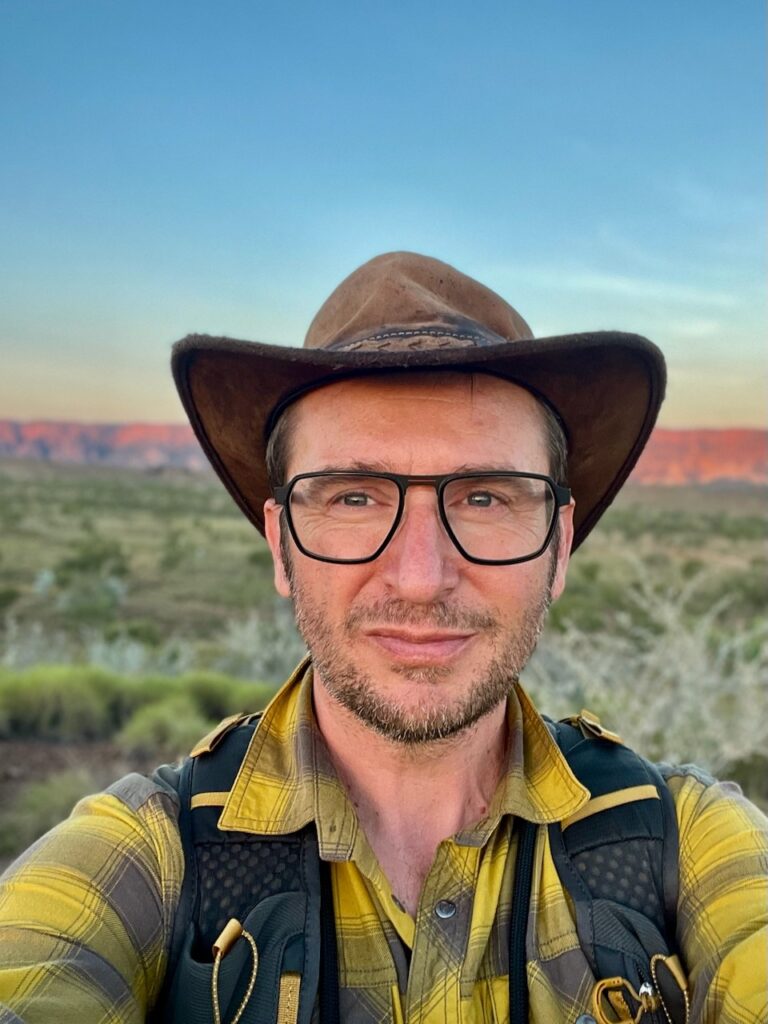
Ashley Staton-Yonge
I am a structural geologist and experimental rock mechanician investigating how deformation organises fluid pathways in the crust. My research connects fault mechanics and crustal fluid transport, from natural hydrothermal environments to laboratory measurements of fluid flow through rocks under stress. Originally from Chile, I moved to London in 2018 to pursue my PhD at University College London (UCL), combining experimental rock mechanics and field structural geology to demonstrate how fracture intersections provide preferential pathways for fluid flow. I remained at UCL as a postdoctoral researcher, contributing to the development of a new rock deformation apparatus to investigate how three-dimensional stresses create and modify fluid pathways in the crust. I am now a Marie Skłodowska-Curie Postdoctoral Fellow at the University of Padua, Italy, where I am further exploring the 3D geometry of crustal fluid flow and its coupling with rock deformation, from the laboratory to natural settings.
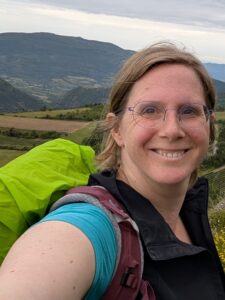
Anne Pluymaker
Anne Pluymakers is Associate Professor Experimental Fluid-Rock-Interaction at the Department of Geoscience and Engineering at TU Delft (The Netherlands) since 2020. The main theme throughout the research of Dr. Pluymakers is the effects of fluid-rock interactions on rock mechanical behavior, with special emphasis on the mechanical characterization of reservoir-, cap- and fault-rocks. After a PhD (2015) at Utrecht University, she spent 3 years at Physics of Geological Processes at Oslo University, Norway. In 2018, Dr. Anne Pluymakers joined the rock mechanical group at TU Delft, and was promoted to assistant professor in 2020. She authored/co-authored 39 peer-reviewed publications as well as several articles and blog posts for the general public. She is Associate Editor for Geoenergy, Science and Engineering, and Science Officer of the EGU Tectonics and Structural Geology Division. During subsurface operations, such as geothermal heat production or storage (CO2, H2), effective stress, pressure and temperature change. The injected fluids are usually chemically different from the native reservoir brine. The TUD experimental rock mechanics team works on determining the mechanical and chemical effects of these changes on rock mechanical properties. Changing stresses leads to changing porosity and permeability due to compaction and fracture development, whereas changing the pore fluid chemistry can affect the strength of chemical-sensitive rocks. The research done by her and her team has strong implications for the geothermal and storage industry, as well as induced seismicity, where they work on rock mechanics-topics related to the energy transition. Applications range from mechanochemical CO2-rock and CO2-wellbore interactions, to THMC behaviour for geothermal energy and branching out to H2-rock interactions and salt cavern abandonment.
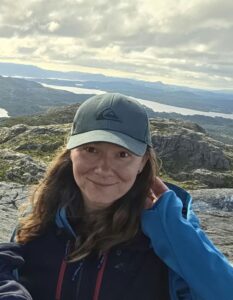
Anne Rogowitz
Anna Rogowitz is Associate Professor of Structural Geology and Tectonics at the Department of Geology (University of Innsbruck, Austria). Her research focuses on the interplay between deformation, metamorphic reactions, and fluid-rock interaction, particularly how these coupled processes control strain localization and the rheological evolution of rocks. Her work combines to investigate deformation processes across spatial and temporal scales. Anna studied geology at Ruhr University Bochum, where she studied under Claudia Trepmann, before completing her PhD and subsequent postdoctoral research at the University of Vienna with Bernhard Grasemann. She then moved to the University of Graz, where she was employed on her own FWF=founded research project, before being appointed Assistant Professor at the University of Innsbruck in 2024. A centra theme of her research is linking microscale deformation processes to the large-scale mechanical behaviour of the crust.
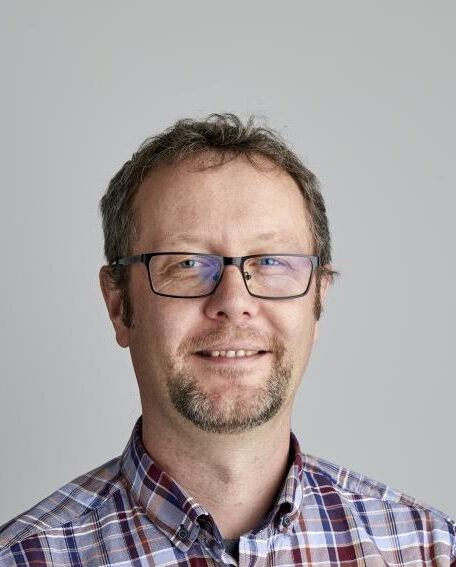
Guiliaume Ducleaux
Dr Guillaume Duclaux is Associate Professor of Structural Geology and Tectonics at Université Côte d’Azur and Deputy Director of the Géoazur Research Institute in Nice, France. He studied geosciences at the École Normale Supérieure de Lyon and earned a joint PhD in tectonics from the Universities of Saint-Étienne and Sydney in 2007. He spent seven years at CSIRO, Australia, applying computational tectonics to mineral exploration, then held a research fellowship at the University of Bergen, Norway. His research combines field structural geology with computational tectonics and geodynamics to understand how continental lithosphere deforms, from deep crustal rheology to the 3D architecture of rifts and ancient orogens, their surface response, and the mineral systems they host. His fieldwork ranges from Precambrian terranes in Africa and East Antarctica to collapsed Variscan orogenic systems. He is an Adjunct Senior Research Fellow at the University of Western Australia and a contributor to the open-source UWGeodynamics code.
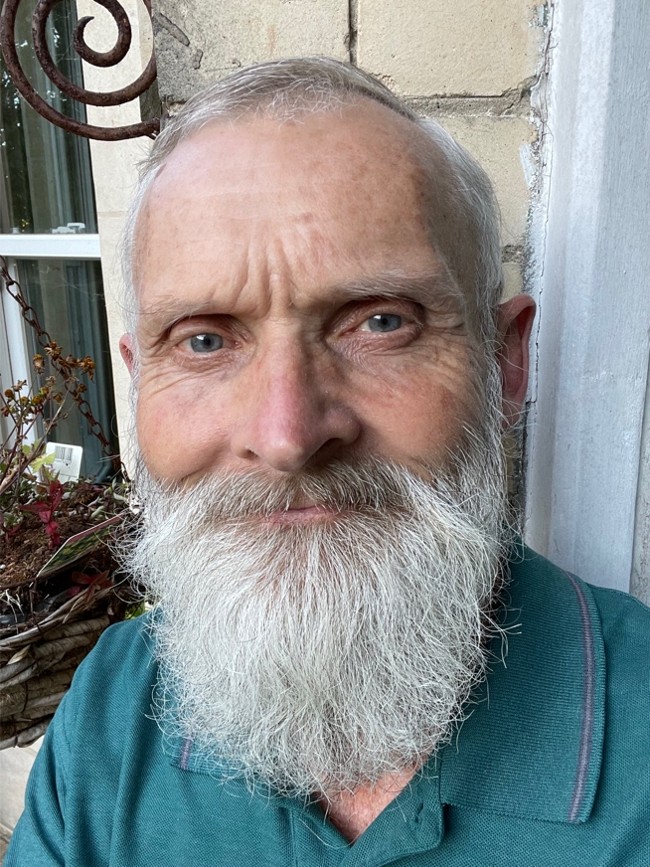
Tom Blenkinsop
Tom Blenkinsop is a professor at the School of Earth and Environmental Sciences, Cardiff University. His research interests are in deformation and fluid flow, and applications of structural geology to natural resources. His focus is on stress analysis, failure criteria, cataclasis and rheology. He works extensively with the exploration and mining industry, mainly on copper, gold and IOCG deposits. Tom graduated from Oxford University, and completed an M.Sc. at Imperial College before undertaking his doctorate at Keele University, and postdoctoral research at the University of California, Santa Barbara. He was professor at the University of Zimbabwe, and then at James Cook University in Australia, where he was director of the Economic Geology Research Unit. He has published numerous papers and two structural geology textbooks. His online course in structural geology for exploration and mining is popular. He is on the editorial advisory board for the Journal of Structural Geology.
Tim Wright
Professor Tim Wright is a leading geophysicist and Professor of Satellite Geodesy at the University of Leeds. His research focuses on the use of satellite radar interferometry (InSAR) and other geodetic techniques to measure and understand active tectonic deformation, earthquakes, volcanoes, and ground subsidence. He has played a pioneering role in developing InSAR applications for monitoring crustal processes and natural hazards worldwide, including major studies of earthquake zones, rift systems, and volcanic regions. He is Co-Director of the NERC Centre for the Observation and Modelling of Earthquakes, Volcanoes and Tectonics (COMET) and has been at the forefront of integrating Earth observation data with tectonic and geophysical research.